









A2 French Vocabulary and Expressions Book | Simple French with Hems
Learn to combine vocabulary, expressions and common word partnerships in real situations
At A2, knowing the translation of a word is no longer enough. Learners must begin choosing vocabulary that fits the situation, combining words naturally and explaining everyday events in greater detail.
The A2 French Vocabulary and Expressions Book helps you progress from short beginner statements to more connected communication.
You will study practical expressions, contextual vocabulary and common collocations for situations such as arranging appointments, discussing health symptoms, handling transportation problems, comparing products, making social plans and expressing basic opinions.
What Makes A2 Vocabulary Different?
At A1, you might learn the word:
le bus — the bus
At A2, you begin using it in connected expressions:
- prendre le bus — to take the bus;
- attendre le bus — to wait for the bus;
- rater le bus — to miss the bus;
- descendre du bus — to get off the bus;
- le bus est en retard — the bus is late.
The A2 book focuses on these relationships between words. This helps you communicate more naturally instead of translating one isolated word at a time.
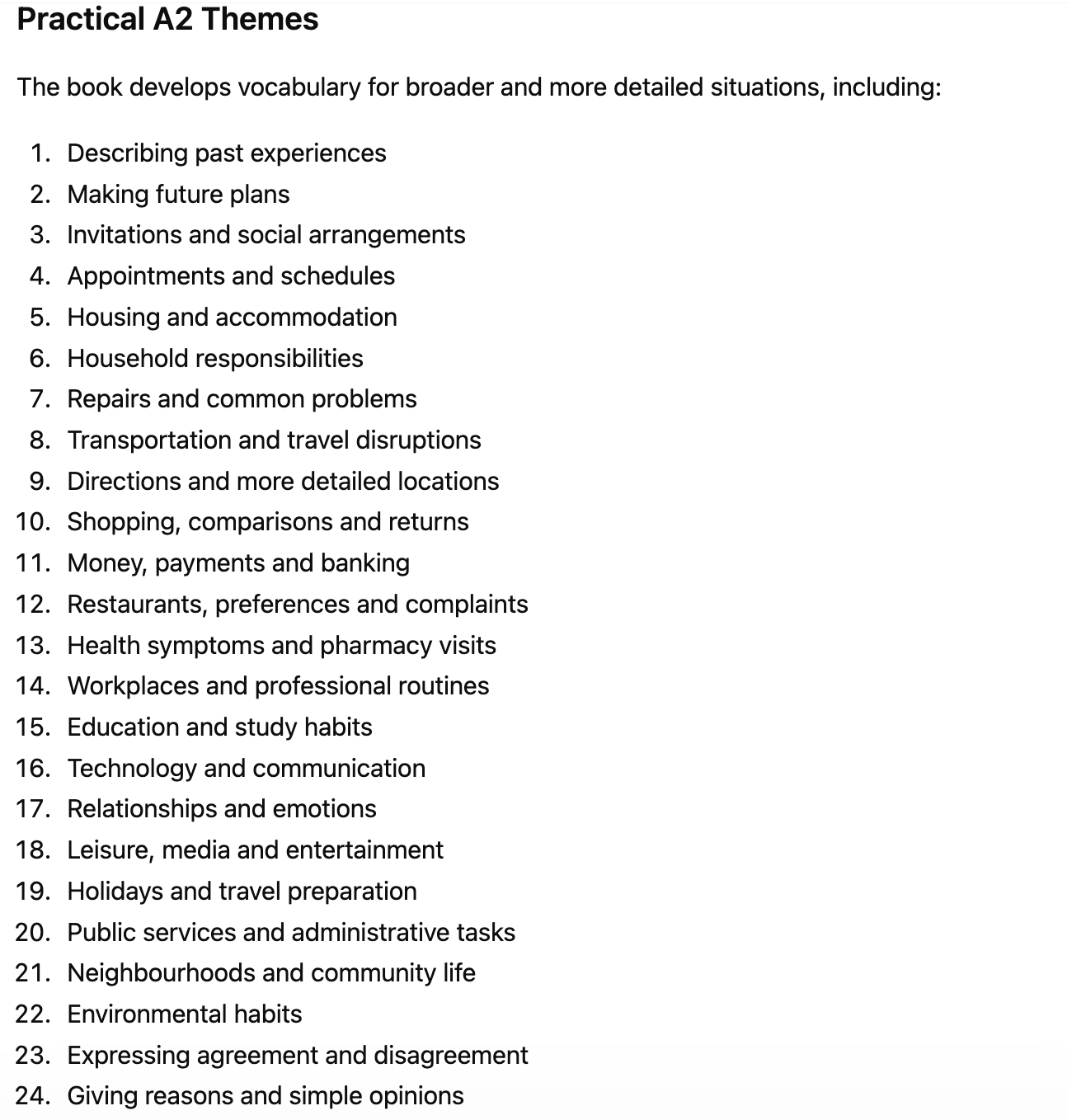
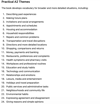
Practical A2 Themes
The book develops vocabulary for broader and more detailed situations, including:
- Describing past experiences
- Making future plans
- Invitations and social arrangements
- Appointments and schedules
- Housing and accommodation
- Household responsibilities
- Repairs and common problems
- Transportation and travel disruptions
- Directions and more detailed locations
- Shopping, comparisons and returns
- Money, payments and banking
- Restaurants, preferences and complaints
- Health symptoms and pharmacy visits
- Workplaces and professional routines
- Education and study habits
- Technology and communication
- Relationships and emotions
- Leisure, media and entertainment
- Holidays and travel preparation
- Public services and administrative tasks
- Neighbourhoods and community life
- Environmental habits
- Expressing agreement and disagreement
- Giving reasons and simple opinions
These themes prepare learners to describe situations, explain small problems and participate in longer everyday exchanges.
Vocabulary in Context
Instead of studying only:
un rendez-vous — an appointment
You learn how it works in a situation:
Je voudrais prendre rendez-vous pour mardi matin.
I would like to make an appointment for Tuesday morning.
Instead of studying only:
retard — delay / lateness
You learn:
Le train est en retard à cause de la neige.
The train is late because of the snow.
Instead of studying only:
avis — opinion
You learn:
À mon avis, cette option est plus pratique.
In my opinion, this option is more practical.
This contextual approach helps learners prepare for reading, listening, writing and speaking tasks in which vocabulary must be understood and used inside complete messages.
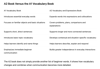
Common A2 Collocations
A collocation is a combination of words that commonly appear together.
Examples include:
- prendre une décision — to make a decision;
- faire une réservation — to make a reservation;
- avoir besoin de — to need;
- poser un problème — to present a problem;
- chercher un emploi — to look for a job;
- passer du temps — to spend time;
- donner un conseil — to give advice;
- payer par carte — to pay by card;
- changer d’avis — to change one’s mind;
- faire la queue — to wait in line.
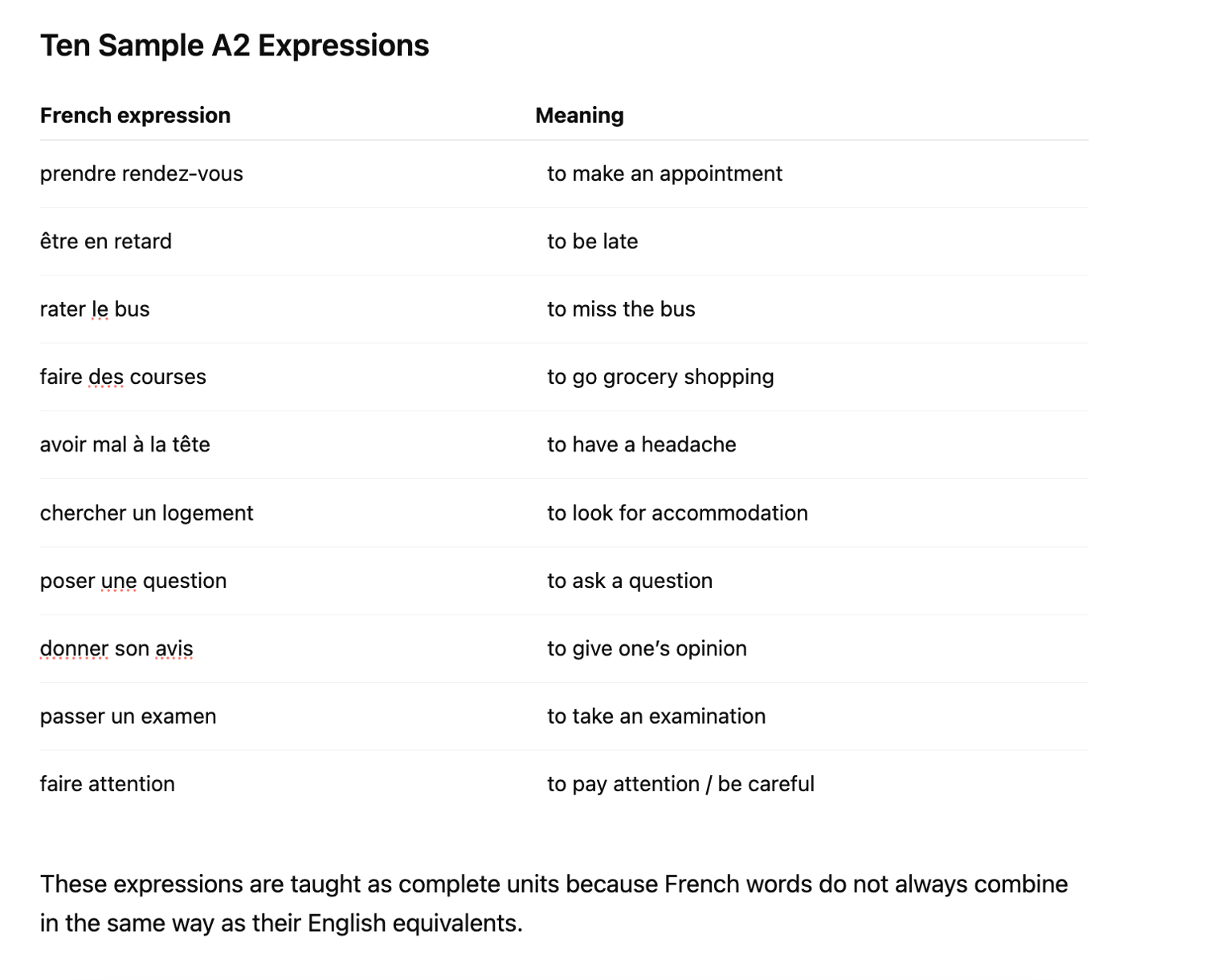
Learning these combinations reduces literal translation and helps sentences sound more natural.
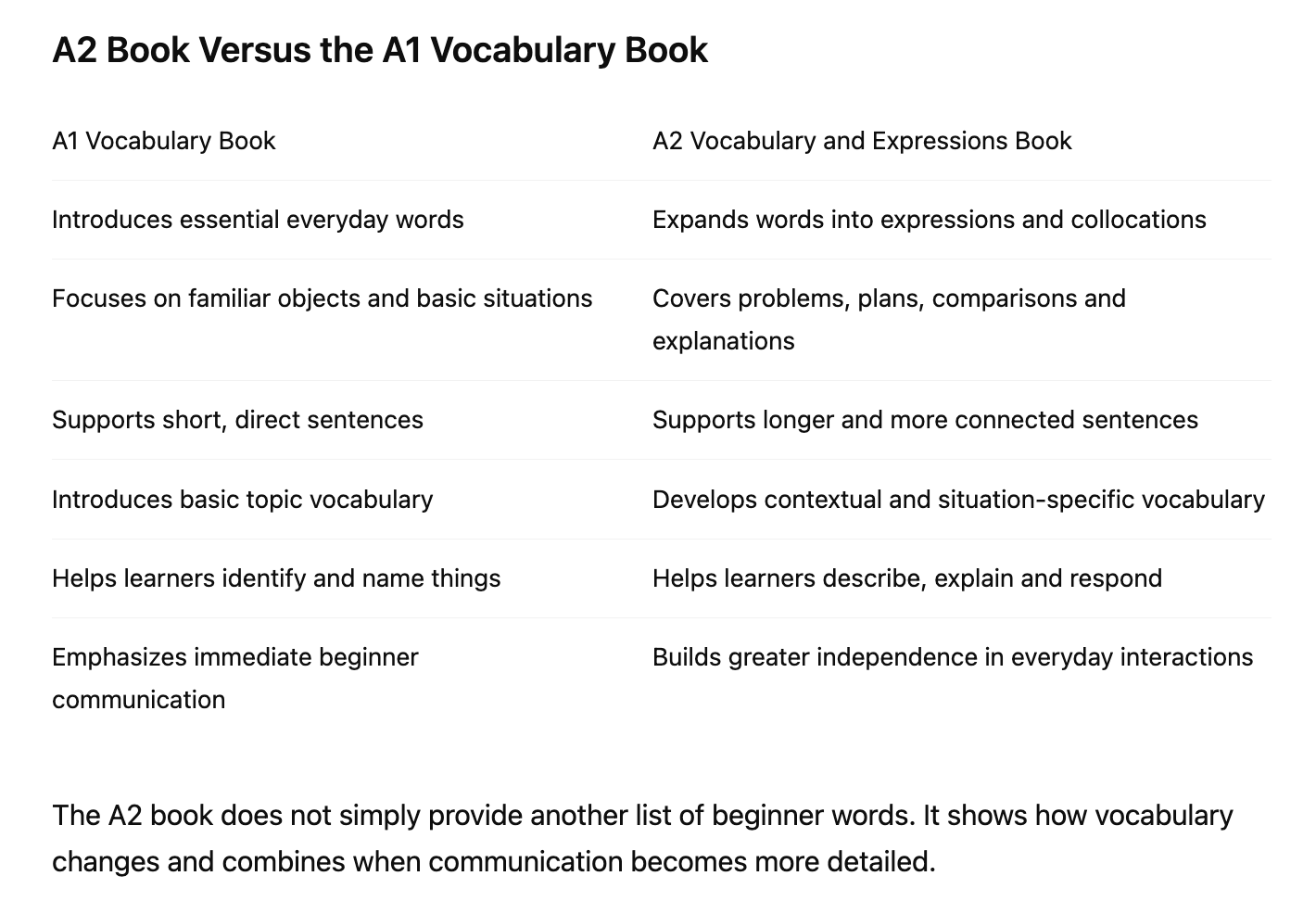
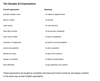
A2 Book Versus the A1 Vocabulary Book
A1 Vocabulary BookA2 Vocabulary and Expressions BookIntroduces essential everyday wordsExpands words into expressions and collocationsFocuses on familiar objects and basic situationsCovers problems, plans, comparisons and explanationsSupports short, direct sentencesSupports longer and more connected sentencesIntroduces basic topic vocabularyDevelops contextual and situation-specific vocabularyHelps learners identify and name thingsHelps learners describe, explain and respondEmphasizes immediate beginner communicationBuilds greater independence in everyday interactions
The A2 book does not simply provide another list of beginner words. It shows how vocabulary changes and combines when communication becomes more detailed.
What Should You Know Before Starting?
This book is intended for learners who have completed A1 or who can already:
- introduce themselves and describe familiar people;
- discuss a basic daily routine;
- understand common nouns, verbs and adjectives;
- form simple present-tense sentences;
- use basic articles and adjective agreement;
- ask and answer familiar questions;
- use simple negation;
- understand essential time, date and location expressions;
- read short beginner paragraphs;
- write several connected sentences about a familiar subject.
Learners who still struggle to form basic sentences should begin with the A1 Vocabulary Book before progressing to this resource.
Sample Learning Activities
Activity 1 — Choose the Natural Expression
Complete the sentence:
Je dois __________ avec le médecin.
a. prendre rendez-vous
b. faire le rendez-vous
c. donner rendez-vous
Answer: a. prendre rendez-vous
Activity 2 — Complete the Collocation
Match each verb with the most natural noun:
- prendre
- poser
- donner
- passer
With:
- une question
- un examen
- une décision
- un conseil
Answers:
- prendre une décision;
- poser une question;
- donner un conseil;
- passer un examen.
Activity 3 — Select Vocabulary for the Situation
Situation: Your train did not arrive at the scheduled time.
Useful vocabulary:
- être en retard;
- attendre;
- le quai;
- l’horaire;
- l’annulation;
- demander des renseignements.
Create two sentences describing what happened.
Activity 4 — Improve the Basic Sentence
Basic sentence:
Le restaurant est mauvais.
More detailed A2 version:
À mon avis, le service est trop lent et les plats sont assez chers.
Use the featured vocabulary to add a reason, comparison or opinion.
Activity 5 — Build a Short Dialogue
Use at least four expressions from the appointment unit to create a conversation between a customer and a receptionist.
Include:
- the reason for calling;
- a preferred day;
- an unavailable time;
- a confirmed appointment.
Detailed Table of Contents
Part One — Everyday Communication
- Starting and Continuing Conversations
- Giving More Detailed Personal Information
- Describing People and Personalities
- Relationships, Feelings and Social Situations
- Invitations, Suggestions and Arrangements
Part Two — Time, Plans and Experiences
- Schedules and Appointments
- Talking About Past Experiences
- Future Plans and Intentions
- Frequency, Duration and Sequence
- Explaining Changes and Unexpected Events
Part Three — Home and Community
- Housing and Accommodation
- Furniture, Appliances and Household Tasks
- Repairs and Problems at Home
- Neighbourhoods and Local Services
- Community Activities and the Environment
Part Four — Travel and Transportation
- Public Transportation
- Delays, Cancellations and Missed Connections
- Asking for and Following Directions
- Travel Preparation and Accommodation
- Describing a Journey or Holiday
Part Five — Shopping and Services
- Comparing Products
- Sizes, Materials, Prices and Preferences
- Returns, Exchanges and Complaints
- Payments, Banking and Personal Expenses
- Customer-Service Conversations
Part Six — Health and Daily Responsibilities
- Parts of the Body and Common Symptoms
- Medical and Pharmacy Appointments
- Giving Basic Advice
- Workplaces and Professional Routines
- Education, Courses and Study Habits
Part Seven — Opinions and Connected Language
- Giving an Opinion
- Agreeing and Disagreeing Politely
- Giving Reasons
- Expressing Advantages and Disadvantages
- Connecting Ideas with Common Linking Expressions
Review Section
- Topic-Based Vocabulary Review
- Collocation Review
- Expression Completion Activities
- Context and Dialogue Practice
- Personal Vocabulary Record
How to Use This Book Effectively
Do not study every expression as an English-to-French translation.
For each unit:
- Learn the complete expression.
- Notice which words commonly appear together.
- Read the example in context.
- Create a new sentence about your own life.
- Use the vocabulary in a short written response.
- Say the sentence aloud.
- Review the expression in a different situation.
For example, after learning prendre rendez-vous, create several variations:
- prendre rendez-vous avec un médecin;
- prendre rendez-vous chez le dentiste;
- prendre rendez-vous pour vendredi;
- annuler un rendez-vous;
- déplacer un rendez-vous.
This develops flexible vocabulary rather than one-time memorization.
Who Is This Book For?
This resource is suitable for:
- learners progressing from A1 to A2;
- students who know individual words but struggle to combine them;
- learners who want to communicate in more detailed everyday situations;
- students developing reading, listening, writing and speaking skills;
- learners following the complete Simple French with Hems pathway;
- students building a stronger foundation before advanced exam preparation.
What This Book Helps You Do
The A2 Vocabulary and Expressions Book helps you develop the language needed to:
- explain everyday situations in greater detail;
- discuss plans and recent experiences;
- arrange appointments and social activities;
- describe minor problems;
- ask for information and clarification;
- compare options;
- express preferences and basic opinions;
- understand common combinations of words;
- produce more connected written and spoken French.
The book supports vocabulary development. The complete Simple French with Hems program provides the broader lessons, quizzes, reading, listening, writing and speaking practice needed to apply that vocabulary across all four language skills.
Edition 2.1 · Revised August 2026